Program Summary
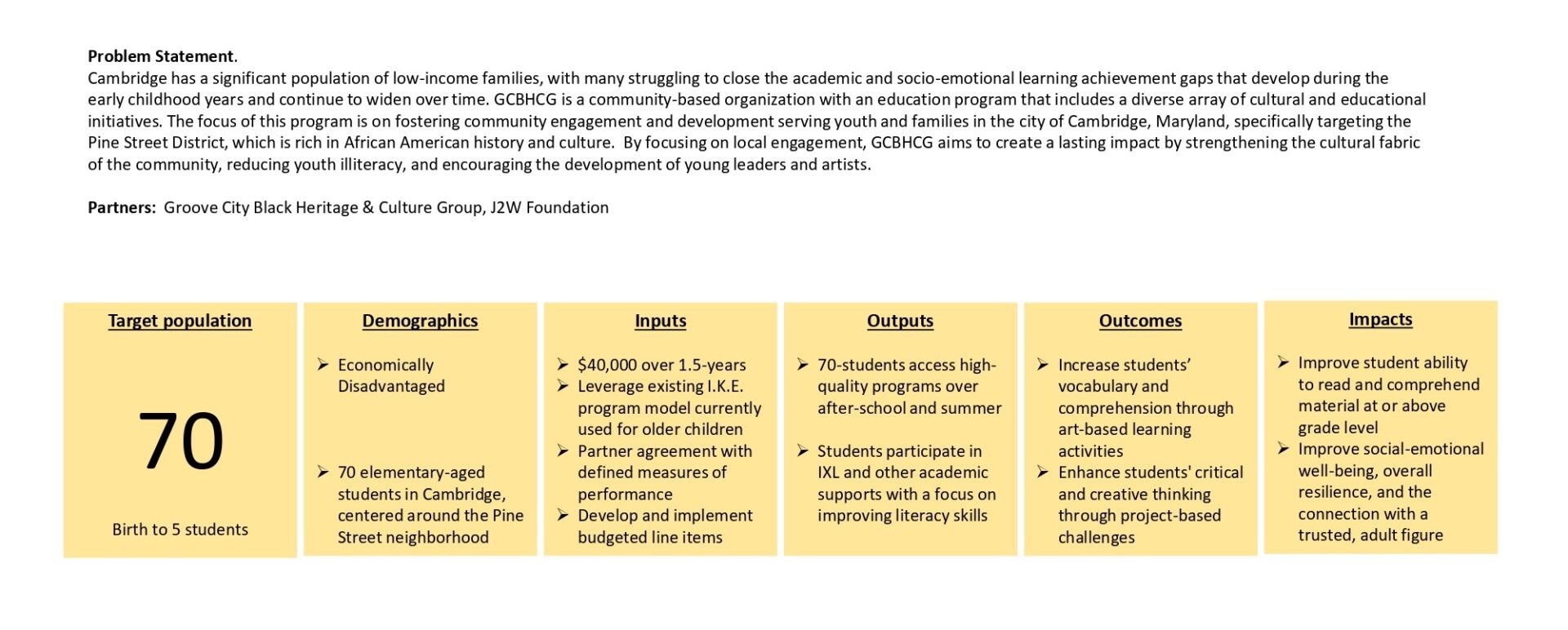
- Goal: The I.K.E. Program (Inspire Knowledge and Empower), as part of the Groove City Black Heritage & Culture Group, seeks to increase access to high-quality Out of School Time (OST) programming for economically-disadvantaged elementary school age students in Cambridge, MD. GCBHCG has been operating for a number of years, demonstrating success in OST programming for middle-school children. There remains a need for increased OST programming for elementary school children. Therefore, this program is designed to further fill in this gap need for the Cambridge community.
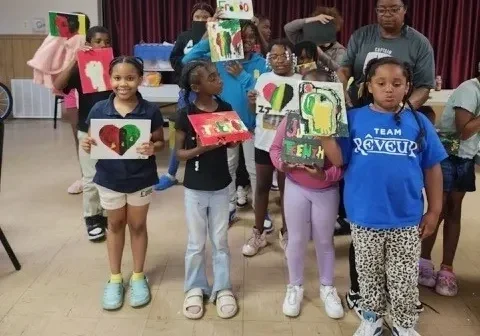
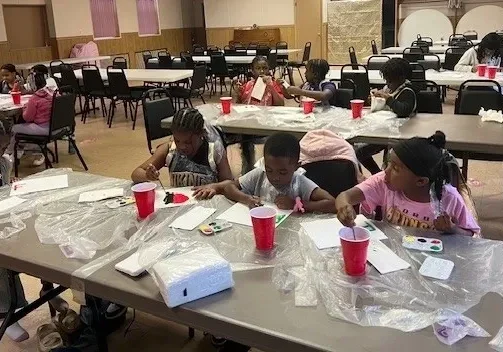
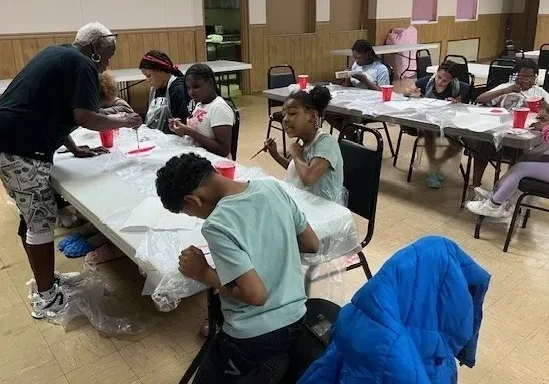
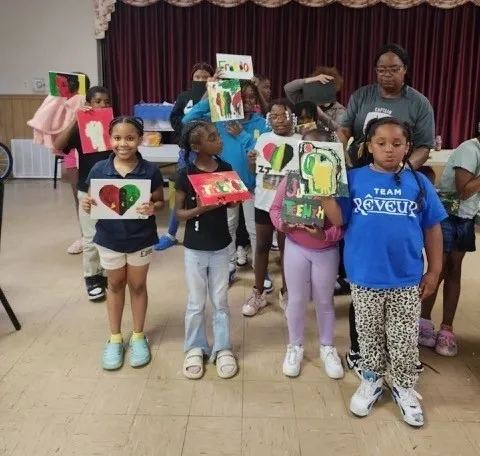
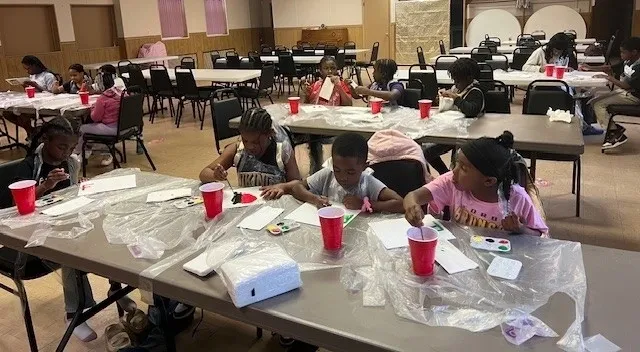
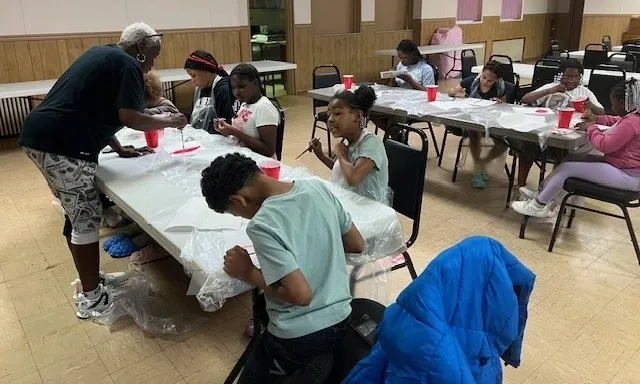
- Framework: GCBHCG will pilot the I.K.E. OST program, specifically for children PreK through 5th grade, with a maximum capacity of 20 students. The program will run in parallel with the Dorchester County Public Schools calendar, with an expected launch date of January 2026. The grant will be funded for 1.5 years, ending after the SY 26-27 school year. This OST program will focus on literacy improvement (reading and reading comprehension), with activities that include reading time, a Creative Learning Project, homework assistance, and experiential opportunities.
- J2W will provide 1.5-years of funding to cover the cost of the program, with an option to renew for another fully school year.
J2W FOUNDATION
STRATEGY: INCREASE ACCESS TO HIGH-QUALITY OST PROGRAMMING
DORCHESTER COUNTY, MD
Measures of Performance
Data Analysis
- Goal: To pilot an Out-of-School Time (OST, or after-school and summer) program for economically-disadvantaged elementary school-aged children within the Dorchester County community.
- Overview: Cambridge has a significant population of low-income families, with many struggling to close the academic and socio-emotional learning achievement gaps that develop during the early childhood years and continue to widen over time. GCBHCG is a community-based organization with an education program that includes a diverse array of cultural and educational initiatives. The focus of their existing program is on fostering community engagement and development serving older youth and families in the city of Cambridge, Maryland, specifically targeting the Pine Street District, which is rich in African American history and culture. By focusing on local engagement and a younger population in this program, GCBHCG aims to create a lasting impact by strengthening the cultural fabric of the community, reducing youth illiteracy, and encouraging the development of young leaders and artists. GCBHCG has been operating for a number of years, demonstrating success in OST programming for middle-school children. There remains a need for increased OST programming for elementary school children. Therefore, this program is designed to further fill in this gap need for the Cambridge community.
- Measures of Performance: We began this project in early 2026 with a focus on process and output measurements, while establishing baselines for academic performance that will then be measured as growth over time. Academic programming will be performed using IXL, with indicators established after baseline testing, as well as age-appropriate Dolch sight word testing.
- Access: Our goal, by the end of the first semester/summer, was to have at least 15 children each in the first semester of afterschool programming and the summer camp program. By the end of SY 2026 (Q2/26), we had 31 students participating across two schools (original goal was one school) in the afterschool program, and we had 24 students participating in the summer camp. These earned a “green” health score.
- High-Attendance: Our goal for year-1 was to have 75% of all students attend the maximum number of hours/days the program is available. At the beginning of the SY, we had 77% max attendance and 95% max attendance by end of first SY, earning a “green.”
- Academic Performance:
- We conducted IXL language arts programming for each child in the afterschool program. In Q1/26, each child was given a baseline on the language arts pre-test. The % of all students who mastered the language arts skills was 8%. By the end of Q2/26, each child was given a post-test assessment, and we noted 20% of students across the schools had mastered the content. This earned a “green” score as our goal was a minimum of 10% on the first post-assessment.
- We conducted Dolch sight word testing at each of the two elementary schools. In Q1/26, each child was given a baseline of how many sight words they could identify. The aggregated baseline across both schools was 80% pass rate. At the end of Q2/26, there was an aggregate 8% improvement rate, earning a “yellow” health score as the goal was to achieve 10% growth.