Program Summary
- Goal: To strengthen and support early childhood programs across Fairfax County through the implementation of a research-based early childhood curriculum that effectively equips educators with rich content and resources. The curriculum implementation supports developmentally appropriate activities for young children. The Early Childhood Curriculum Initiative is being implemented by the Fairfax County-based Fairfax Futures non-profit organization, in partnership with Fairfax County’s Institute for Early Learning (IFEL).
- Background: In 2021, the state of Virginia launched Ready Regions, a “regional network capable of supporting increased access to quality early childhood opportunities across the Commonwealth.” VQB5 (Virginia Quality Birth to Five) is the unified measurement and improvement system administered by Virginia Department of Education and coordinated locally by Ready Regions with support from Virginia Early Childhood Foundation. VDOE believes that quality teaching and learning is supported by promoting curriculum use in all settings. Using approved and effective curricula helps teachers support learning and development of critical learning skills in all early childhood programs and settings. This initiative will be supportive of the county and state-wide work to advance the quality of early childhood programs that are participating in Ready Regions. Family childcare educators will be the primary audience that we support as we pilot-test the program.
- Theory of Change: A high-quality curriculum defines specific, sequenced learning goals to meet all children’s individual needs, including children with disabilities, suspected delays, or other special needs, and provides developmentally appropriate structure and sequence to classroom activities that promote children’s engagement. We believe if we deliver a quality curriculum to programs within Opportunity Neighborhoods that do not have the capacity to implement with current resources, we can help teachers improve their interactions, providing ways to create nurturing and responsive practices and environments that foster trust and emotional security and thus ultimately improve children’s outcomes and preparation for kindergarten.
- Framework: We will employ The Creative Curriculum® for Infants, Toddlers & Twos, a comprehensive, research-based early childhood curriculum created by Teaching Strategies, LLC. The Creative Curriculum equips early childhood educators with the tools to support early learners with building self-confidence, creativity, and enhancing critical thinking skills through hands-on, project-based investigations. The Creative Curriculum aligns with the Virginia Early Learning Standards and promotes the following benefits: Builds on Early Learner’s Social-Emotional Development | Improves Kindergarten Readiness | Nurtures the Whole Child | Builds early language and literacy skills | Individualizes instruction | Develops math skills | Includes technology tools to streamline teaching
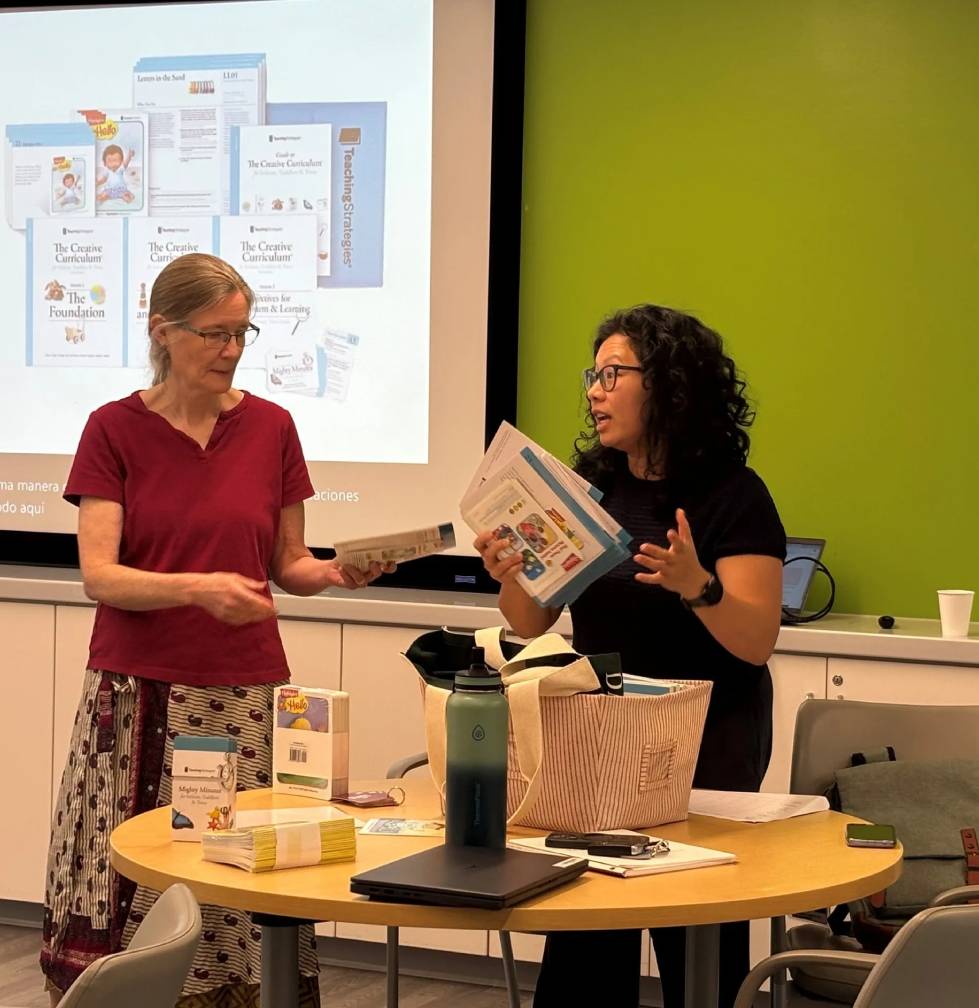
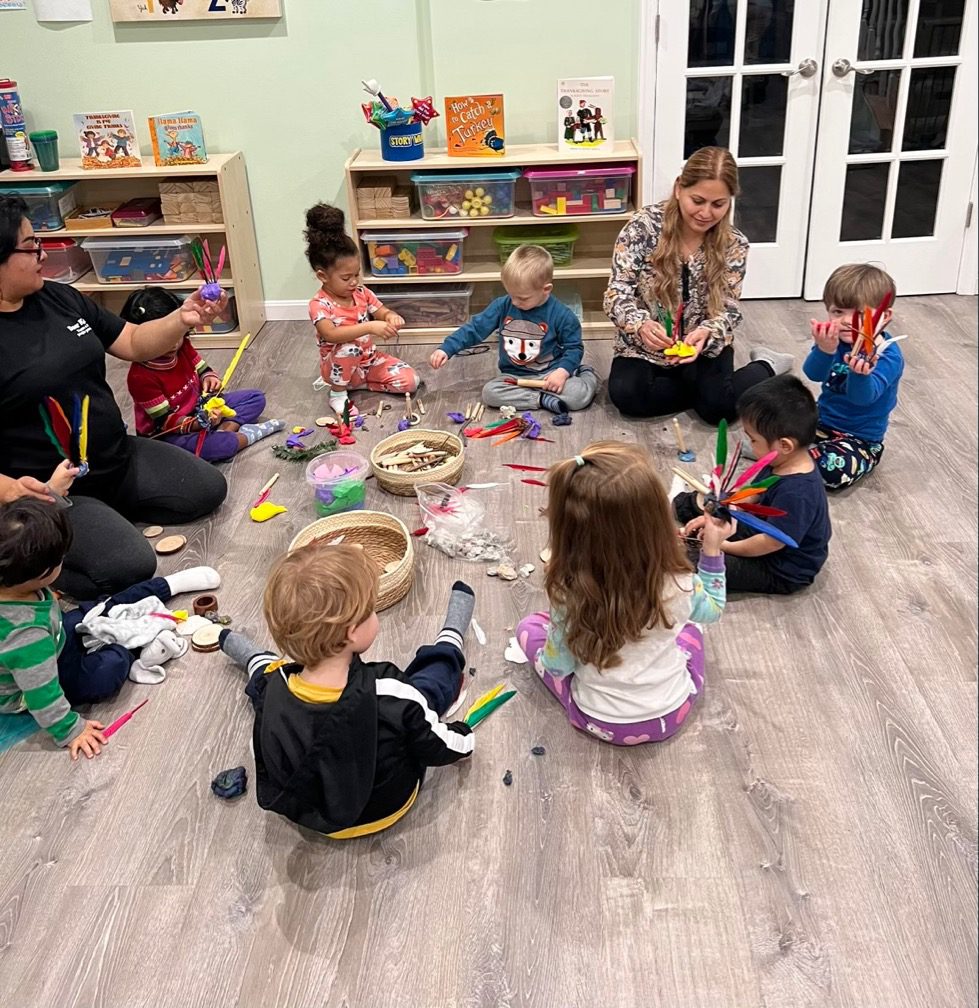
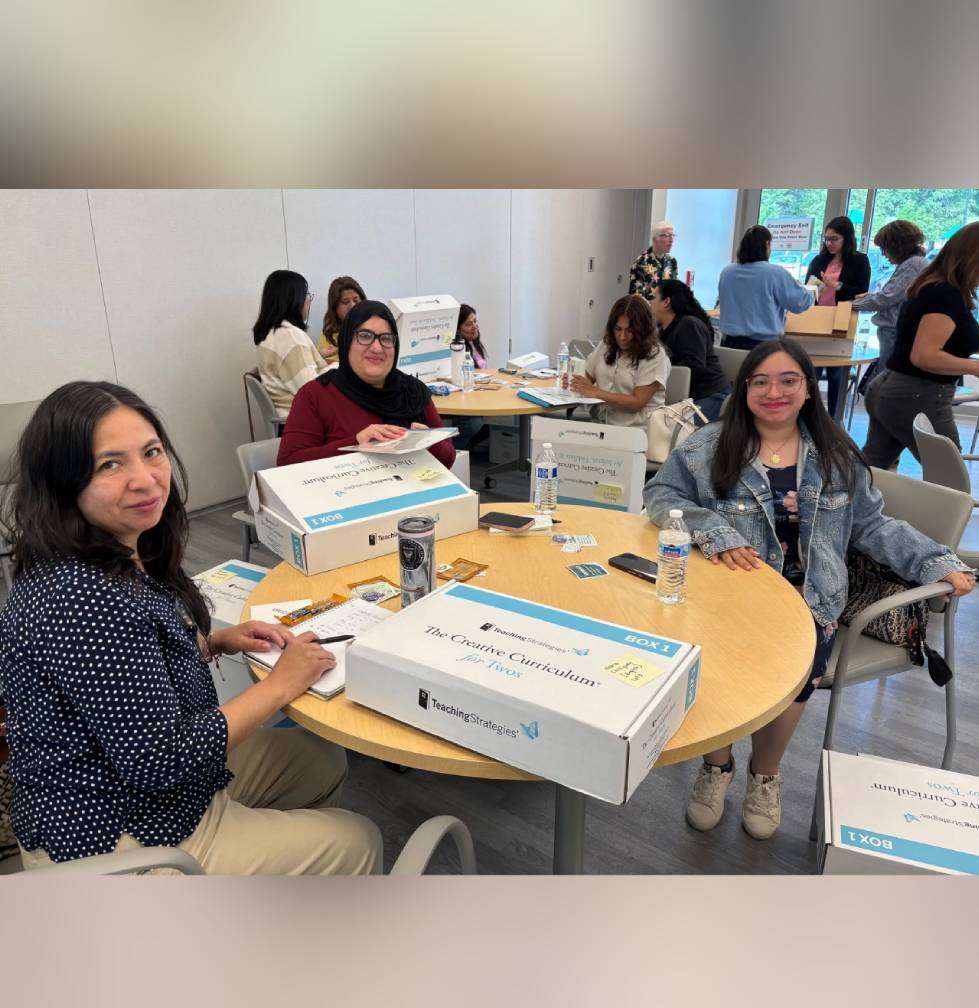
"The online mini-sessions for The Creative Curriculum were extremely helpful in breaking down each component of the curriculum in a clear and manageable way. The step-by-step examples helped me understand how to use the materials during daily routines, plan activities with intention, and connect learning experiences to children’s developmental goals. As a result, I feel more confident, organized, and purposeful in implementing the curriculum in my program.” - Brandy M, owner of a family child care program in Fairfax, VA
“The online mini-sessions helped simplify The Creative Curriculum by presenting the material in smaller, easy-to-understand sections. This approach made it easier to focus on key concepts without feeling overwhelmed. The sessions reinforced my understanding of the curriculum and provided practical examples that I have been able to apply directly in the classroom.” - Mary G, owner of a family child care program in Fairfax, VA
Measures of Performance
For more information, please see Data Analysis section at the bottom of the page.
Data Analysis
- Goal: To strengthen and support early childhood programs across Fairfax County through the implementation of a research-based early childhood curriculum that effectively equips educators with rich content and resources. The curriculum implementation supports developmentally appropriate activities for young children. The Early Childhood Curriculum Initiative is being implemented by the Fairfax County-based Fairfax Futures non-profit organization, in partnership with Fairfax County’s Institute for Early Learning (IFEL).
- Background: In 2021, the state of Virginia launched Ready Regions, a “regional network capable of supporting increased access to quality early childhood opportunities across the Commonwealth.” VQB5 (Virginia Quality Birth to Five) is the unified measurement and improvement system administered by Virginia Department of Education and coordinated locally by Ready Regions with support from Virginia Early Childhood Foundation. VDOE believes that quality teaching and learning is supported by promoting curriculum use in all settings. Using approved and effective curricula helps teachers support learning and development of critical learning skills in all early childhood programs and settings. This initiative will be supportive of the county and state-wide work to advance the quality of early childhood programs that are participating in Ready Regions. Family childcare educators will be the primary audience that we support as we pilot-test the program.
- Theory of Change: A high-quality curriculum defines specific, sequenced learning goals to meet all children’s individual needs, including children with disabilities, suspected delays, or other special needs, and provides developmentally appropriate structure and sequence to classroom activities that promote children’s engagement. We believe if we deliver a quality curriculum to programs within Opportunity Neighborhoods that do not have the capacity to implement with current resources, we can help teachers improve their interactions, providing ways to create nurturing and responsive practices and environments that foster trust and emotional security and thus ultimately improve children’s outcomes and preparation for kindergarten.
- Framework: We will employ The Creative Curriculum® for Infants, Toddlers & Twos, a comprehensive, research-based early childhood curriculum created by Teaching Strategies, LLC. The Creative Curriculum equips early childhood educators with the tools to support early learners with building self-confidence, creativity, and enhancing critical thinking skills through hands-on, project-based investigations. The Creative Curriculum aligns with the Virginia Early Learning Standards and promotes the following benefits: Builds on Early Learner’s Social-Emotional Development | Improves Kindergarten Readiness | Nurtures the Whole Child | Builds early language and literacy skills | Individualizes instruction | Develops math skills | Includes technology tools to streamline teaching.
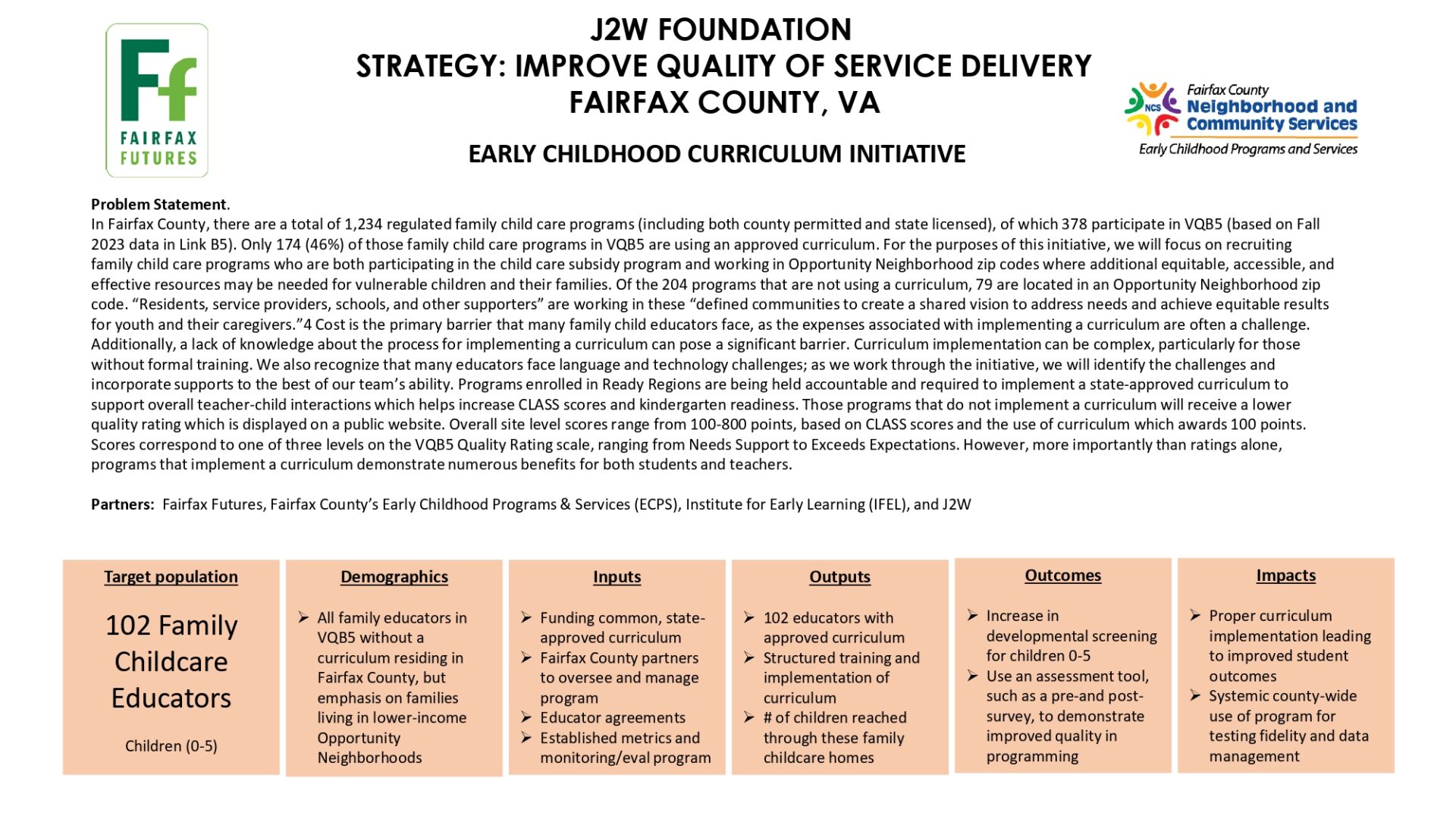
- Measures of Performance: We will begin this project with a focus on process and output measurements, which will include a phased approach to training and implementation, growing the number of participating programs.
- Initial output and outcome measures:
- Number of family childcare educators from Opportunity Neighborhood zip codes. Our goal is to have the majority of our educator sites come from Opportunity Neighborhoods. As of Q2/26, we scored a “yellow” as our current cohorts combined account for 37% of our total population (this has reflected an increase from year-1, which was only 30% of the total population).
- Number/percentage of family childcare educators who both participate and then complete the course requirements and implement a curriculum. Our goal, closing out year-2, was to have 20 total educators in the program and 20 completing the program (along with beginning to implement the curriculum in their classrooms) and we ended cohort 2 with 33 total for each, earning “green” health scores.
- Number of children reached in family childcare programs of educators who complete the course requirements and implement a curriculum. Our goal, closing out year-2, was to have at least 170 children directly impacted by this curriculum implementation. We ended year-2 with 238 children, earning a “green.”
- Using different assessment tools, we seek to demonstrate how implementation of The Creative Curriculum improves quality by increasing the competencies and skillsets of early childhood educators in the classroom.
- Reflect the value of the curriculum training and supports: Our goal is to measure what percentage of our trained educators self-assess themselves as having intermediate or above-level knowledge of the curriculum and thus improving their understanding of – and confidence with – the new curriculum. Our goal is 100% and in Q2/26, we are showing 86%, thus earning a “yellow” health score.
- Reflect the value of the curriculum implementation by assessing the educators CLASS scores over time, looking at 2 fields (Emotional/Behavior Support and Engaged Support). By end of Q2/26:
- Emotional/Behavioral Support: Goal was 6.14, our aggregated cohort score was 6.15 (up from 5.83 same time last year), earning “green.”
- Engaged Support: Goal was 4.13, our aggregated cohort score was 4.39 (up from 3.75 same time last year), earning “green.”